China-Europe Rail in Practice: Planning Around the Unknowns
How to plan China-Europe rail freight when corridors and border times keep moving.
The appeal is the middle ground
Rail offers transit roughly between ocean and air, with a cost closer to ocean than air. For goods with dependable but not immediate demand, that combination is often the best fit available.
Why the schedule is less fixed than it looks
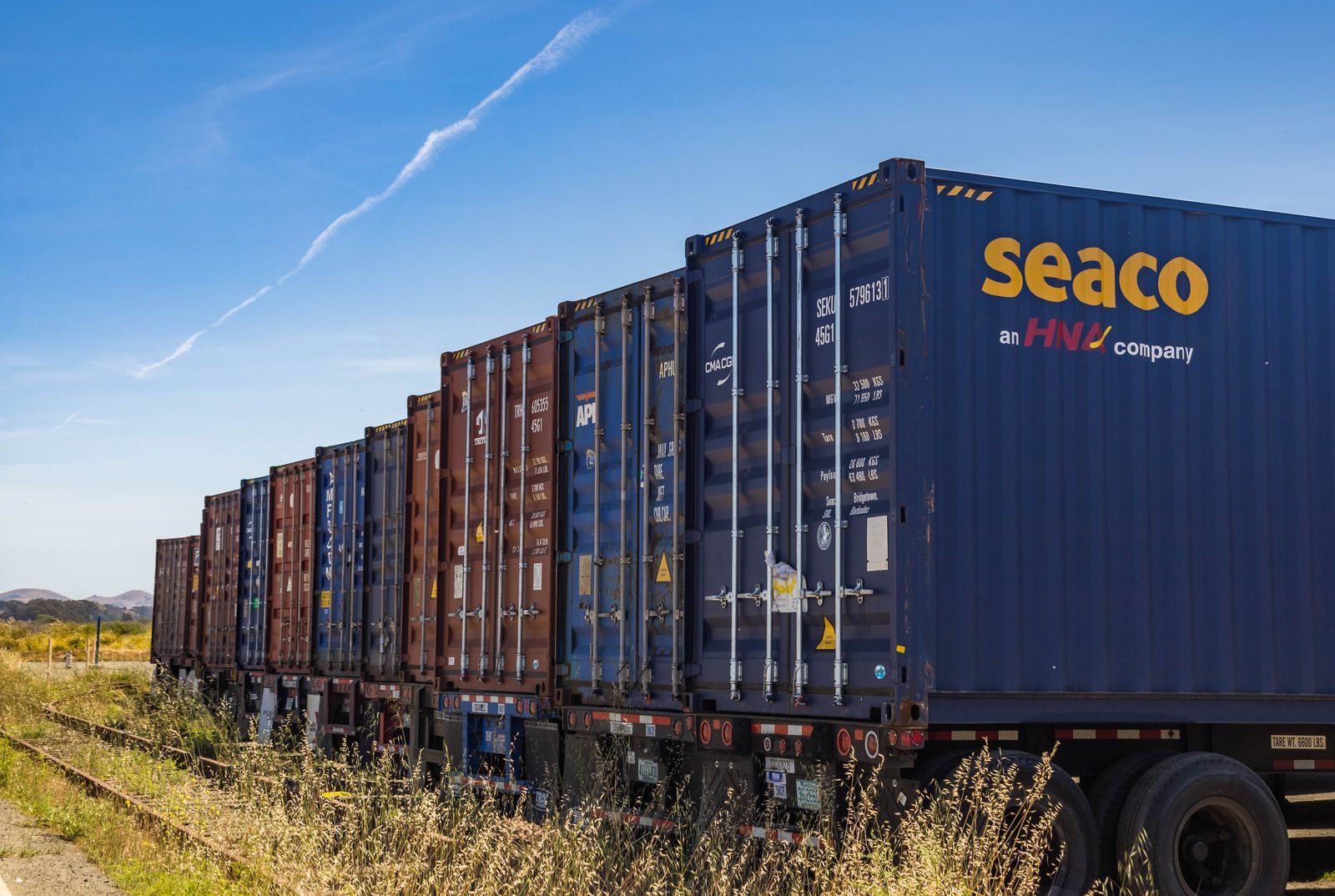
Rail transit depends on border crossings, gauge changes and corridor availability, and corridors can change for reasons outside any forwarder's control. A plan that assumes a fixed transit will eventually be wrong; a plan built with a buffer and a fallback will usually hold.
Planning habits that help
Book early in peak periods, keep documentation spotless so cargo is not held at a border, and keep a contingency for shipments where a two-week slip would actually hurt - those should go by air instead, decided in advance rather than in a panic.
Why rail transit is always quoted as a range
Rail transit is a chain of fixed departures with variable handovers, which is why forwarders quote a range rather than a date. The train runs to a schedule of sorts, but the time spent at borders, in terminals and during transhipment is not fixed, and it is usually the largest source of variation in the whole transit.
It also matters whether the range is terminal-to-terminal or door-to-door. A door-to-door figure includes collection in China, the rail leg, and then final delivery in Europe, which can add several days depending on how far the consignee sits from the rail terminal. Comparing a door-to-door rail transit against a port-to-port ocean transit is a comparison of two different things.
The gauge change, and why containers get lifted
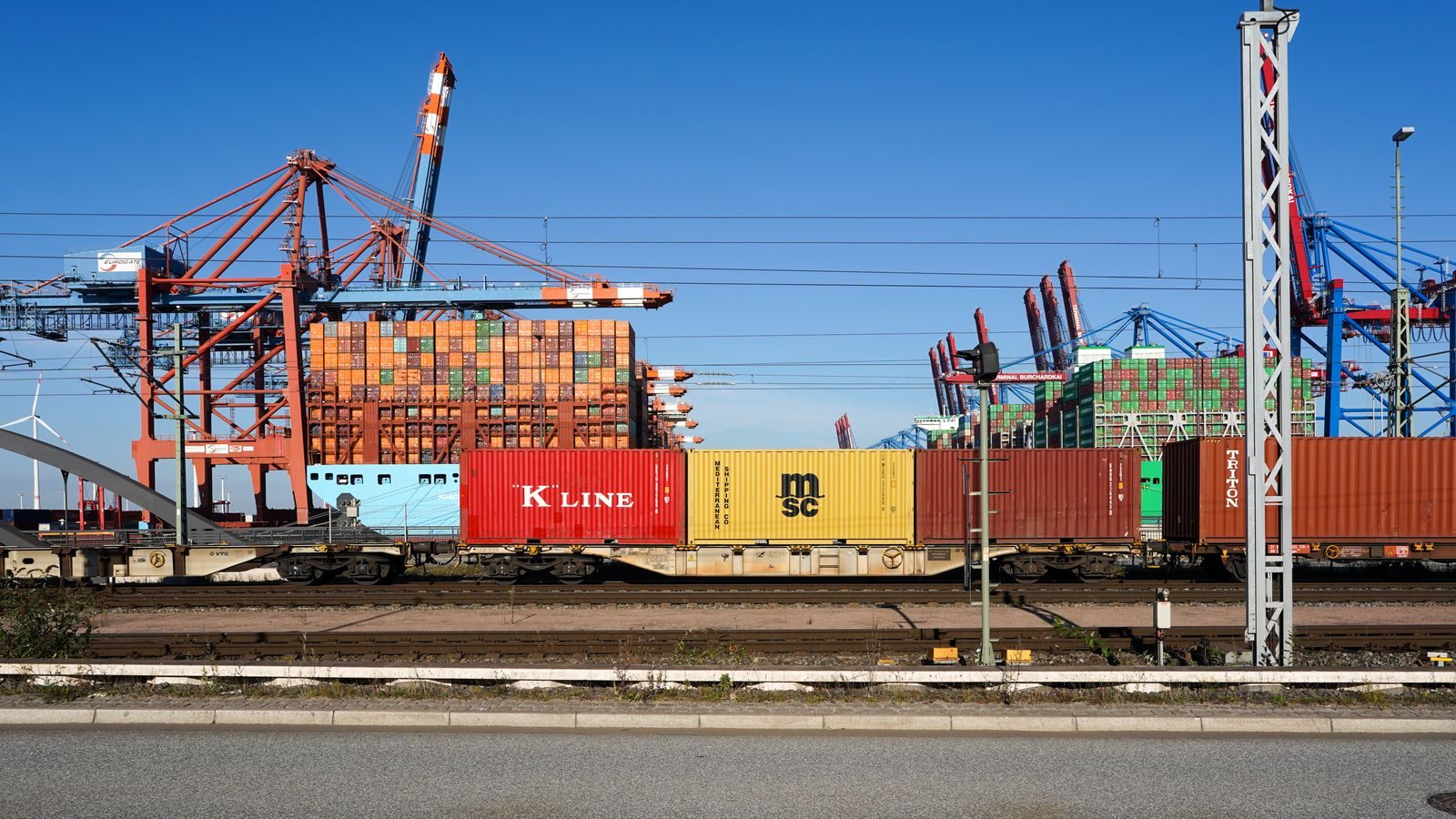
China and most of Europe run on standard gauge, while Kazakhstan and the wider CIS network use a broader 1520 mm gauge. Containers therefore have to move between trains at the border, which means being lifted, sometimes stored briefly, and lifted again. Each of those operations is a handling event with its own risk and its own dwell time.
This single feature explains much of what is unusual about rail: why seals and container condition are worth recording before dispatch, why a small number of damaged containers cause disproportionate delay, and why transit estimates carry a genuine range. It is not inefficiency, it is the physical reality of moving boxes between two rail networks.
The variables that actually decide rail versus sea
The first is value density. Rail's cost premium over ocean is easier to justify when a container holds expensive goods, because the interest and risk carried during a long sea transit scale with value. The second is where the cargo is going: rail terminates inland in Europe, so a consignee far from a seaport gains more from rail than one sitting next to Rotterdam or Hamburg.
The third is timing. Goods that must arrive before a season, a promotion or a production start need a mode whose variability they can absorb. Goods with no deadline at all should go by sea; paying rail rates for cargo that could sail is simply buying speed nobody is waiting for. Rail earns its place in the middle, and it stops earning it at both ends of that middle.
Groupage or a dedicated block train
Groupage by rail works like LCL by sea: your cargo shares a container and waits for the container to fill or for the cut-off. It gives small shippers access to the corridor but adds a consolidation wait and a higher cost per cubic metre. A dedicated block train is arranged for a defined volume on a defined schedule and removes that wait, in exchange for a commitment to fill it.
The choice is essentially a volume decision. Below the volume where a block train can be filled, groupage is the only way onto the corridor. Above it, the schedule certainty and the reduced handling that a dedicated train offers are usually worth the commitment, particularly for regular flows where the volume is predictable enough to plan around.
Documentation across two legal regimes
Rail freight across this corridor crosses between two different international rail conventions, and the consignment note has to reflect that. The practical point for a shipper is not the legal detail but the consequence: the waybill type must match the route, and the details on it must be right the first time, because correcting a rail consignment note mid-journey is far harder than correcting a sea bill of lading.
Add to that the customs documentation for each territory the train passes through, and the case for preparing everything before dispatch becomes obvious. Cargo that is held at a border is not just late, it is sitting in a place where nobody involved in the sale can easily do anything about it, and each day of a border hold is a day added to every downstream promise.
Where the risk sits, and what insurance should cover
Risk transfer is set by the trade term, not by the mode, so the same Incoterm behaves differently on rail than it does on a sea route simply because there are more handovers. With the container being lifted at a gauge change and handled at several terminals, the number of points at which damage can occur is larger than on a direct sea voyage.
That makes the scope of cargo insurance worth checking rather than assuming. Cover that runs warehouse to warehouse, including transhipment, is the appropriate shape for this corridor; cover that quietly excludes a transhipment leg is not. The premium difference is small and the exposure difference is not.
Planning for the two-week slip
The honest way to use rail is to decide in advance which shipments could tolerate a two-week slip and which could not, and to route accordingly. Cargo that could not tolerate it belongs on air freight, and the decision is far cheaper when it is taken at the planning stage than when a border hold makes it urgent.
Everything else follows from that: book earlier in the peak periods before Chinese New Year and Golden Week when space tightens, keep the documentation complete so cargo is never held for a paperwork query, and keep a buffer in the promise made to the end customer rather than only in the internal plan. Rail performs well when it is planned as a variable mode and badly when it is planned as a fixed one.
Container types, and what the corridor actually accepts
Rail on this corridor is overwhelmingly a 40ft high cube business. That shape suits palletised and cartoned general cargo, which is what most of the traffic is. Other equipment is available but more constrained than on a sea route: flat racks, open tops and reefers depend on the operator and the service, and availability has to be confirmed per booking rather than assumed from a rate sheet.
Weight deserves a separate check. Rail wagons have their own axle and per-wagon limits, and the practical payload per container on rail is not identical to what the same container could carry by sea. Where a shipment is dense, it is worth confirming the permissible weight with the operator before stuffing, because discovering a weight limit after the container has been packed and delivered to the terminal is an expensive way to learn it.
How rail is priced, and what moves the number
Rail is normally quoted per container per corridor, all-in to a named destination terminal, rather than as a rate per weight or measure. That makes it easy to compare against a container rate by sea, and it makes it important to ask what the price includes at the European end, since destination handling and delivery inland are frequently separate.
What moves the price is space rather than distance. Block train capacity is finite and scheduled, so when the corridor is tight the premium over ocean widens, and in quiet periods it narrows. This is the reason the general relationship - rail is cheaper than air and dearer than sea - matters less than the current spread. It is the spread, not the ranking, that tells you whether rail is worth it this month for this particular consignment.
Compare the whole door, not the main leg
The comparison that decides the question is door-to-door. Ocean freight into a European port is followed by customs clearance and then an inland truck leg, and for a consignee several hundred kilometres inland that truck leg can be long enough to erase the ocean rate advantage. Rail terminates inland, so the last leg is shorter and sometimes the total is closer than the headline rates suggest.
The same logic works in reverse for a consignee near a port: they already have the cheapest possible last leg, so rail's inland advantage does not help them, and they are paying a premium for transit time they may not need. Running the comparison as two complete door-to-door chains, with clearance and delivery included on both sides, usually produces a clear answer for a given destination, and that answer is worth re-checking when volumes or rates change rather than being treated as permanent.
Choosing the European terminal, and why it changes the cost
Rail services terminate at a small number of European hubs, and which one you use matters more than it might appear. The terminal sets the length and cost of the final delivery leg, so a consignee far inland from the coast may find one destination substantially cheaper than another even though the rail leg itself is similar. It also sets the point at which goods are presented to customs on entry into the European Union, which determines which member state's system the entry is lodged with.
Where a shipment is then moved onward under a transit procedure to be cleared in another country, that adds a step and a timeline that has to be planned rather than assumed. For most consignees the practical sequence is to choose the terminal by the total door-to-door cost, confirm who lodges the customs entry, and check whether the onward move is a domestic delivery or a transit movement. Those three answers usually determine whether a given destination is competitive on rail at all, and they are worth obtaining before a rate is accepted.
Rail freight references
The corridor described here is one instance of rail freight, which is governed by international rail conventions rather than by maritime law. Where the movement is sold, the risk transfer is still decided by the trade term, and the definitions are published by the International Chamber of Commerce (Incoterms).