Project cargo is logistics by engineering: the route, the equipment and the permits decide the plan, not a published schedule.
What makes it different
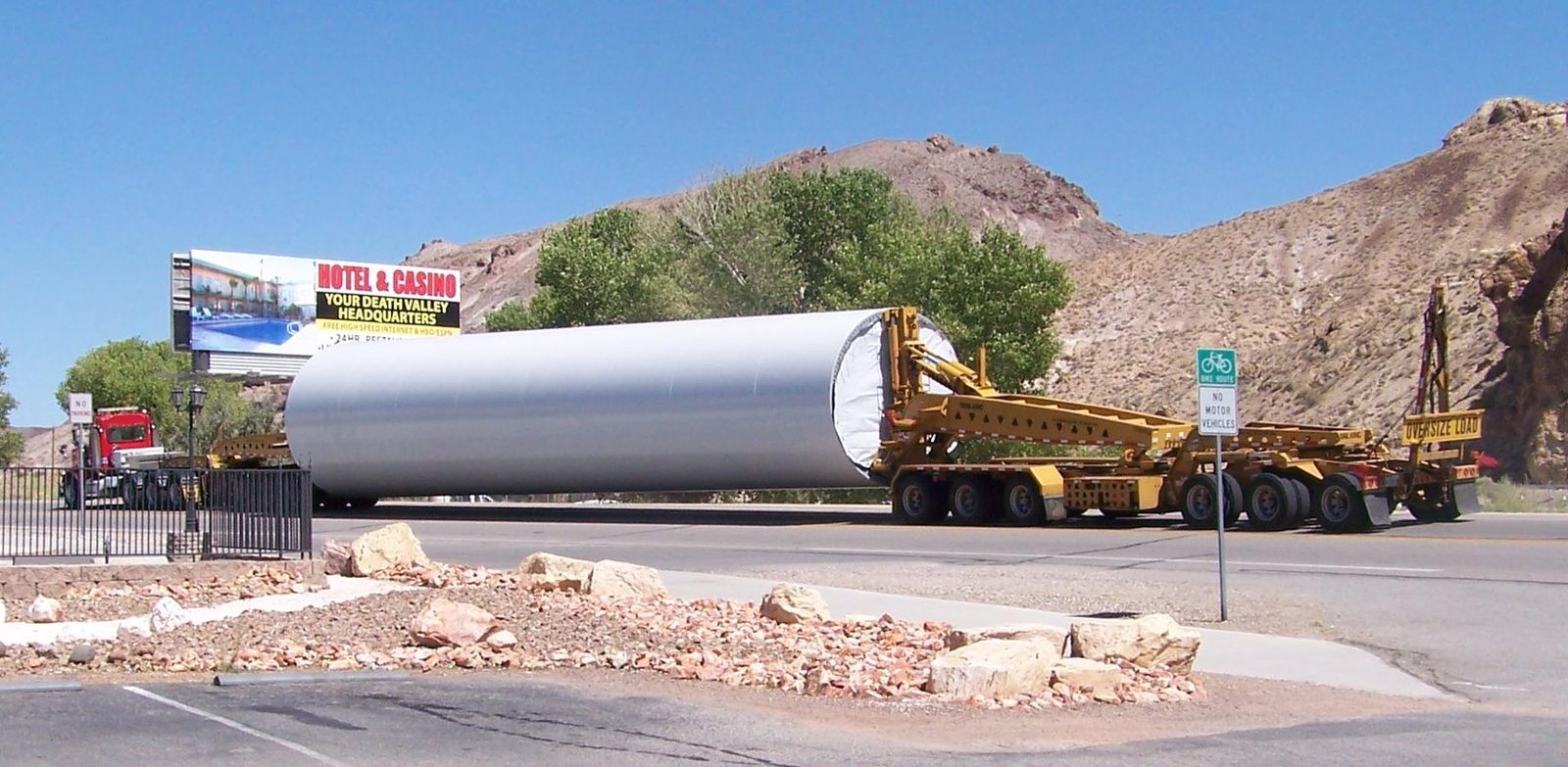
Out-of-gauge and heavy-lift shipments need route surveys, lifting plans, permits and special equipment. Flat racks, open tops and breakbulk vessels have their own booking windows, so early planning matters far more than on standard container cargo.
Risk sits in the interfaces
The dangerous moments are handovers - factory to truck, truck to terminal, terminal to vessel. A lifting and lashing plan agreed in advance and followed on site is what keeps an oversize shipment intact.
What a route survey actually examines
Project cargo is constrained by physical reality: the cargo has to fit through every point on the route. A route survey works through that route in order, looking at road widths and turning radii, bridge heights and weight limits, overhead lines, roundabouts, and the gradients on any climb. Each is a potential blocker, and one is enough.
The survey also has to consider timing, because a route that is passable at night is not necessarily passable during a market or a rush hour, and a road that is temporarily closed for works may reopen after the cargo has arrived to find it shut. Doing this work before commitment is what allows a plan to be quoted with confidence instead of revised in transit. Where the survey rules the obvious route out, an alternative is designed rather than improvised.
Lifting, lashing and choosing the equipment
Almost all damage to oversize cargo happens at a transfer, so the lifting and lashing plan is the core engineering document of a project move. It sets out the lifting points, the sling angles and the resulting load in each point, the spreader or beam, and how the load is restrained against movement during road transport and on the vessel.
The equipment decision flows from that plan and from the cargo's own dimensions and centre of gravity. Flat racks and open tops keep a load in the container system and the shipping line's handling, while breakbulk vessels handle cargo that will not fit a container at all but sail on their own schedules and berths. The right answer depends on which constraint binds: if the schedule is the priority, keeping the cargo in a containerised solution is usually worth accepting a tighter dimensional limit.
Permits, escorts and corridor timing
An abnormal load needs permission before it moves, and the permit usually carries conditions: which roads, which hours, whether an escort is required and what kind. The permits are specific to the route and the vehicle, which is why the survey has to be settled first. Applying late, or for the wrong configuration, is the most common reason a planned movement slips.
Because of this, project cargo is scheduled around permissions rather than around a timetable, and the sequence is deliberately built with slack between the steps. Where several jurisdictions are involved, the timings have to be coordinated so that no leg is allowed to expire before the cargo reaches the next. Early planning is not caution on these shipments, it is the only way the dates hold.
Insurance, liability and the handovers in between
Liability is at its most limited exactly where the risk is at its highest. Carrier terms typically cap exposure by weight, which is meaningless for a single heavy item whose value is not proportional to its mass, and each handover between parties is a point where responsibility can be argued rather than accepted. Project cargo therefore needs cover arranged deliberately rather than assumed to follow the standard terms.
What makes this workable in practice is documentation at the interfaces. Photographic condition records before and after each lift and each leg, a signed handover at each transfer, and an agreed supervision arrangement on site give everyone the same picture of what state the cargo was in. Where something does go wrong, a clean record is the difference between a claim that is settled and one that is contested for months.
- Route survey before commitment
- Lifting and lashing plan agreed in writing
- Permits handled early
- On-site supervision at handovers
Talk to us about project cargo
Tell us the cargo, the route and the deadline. We will reply with a workable plan and a costed quote.