How to Evaluate a China-Based E-commerce Fulfilment Partner Before You Commit
What a China-based fulfilment partner should deliver, how the rate card is actually built, which operational checks separate a reliable 3PL from a risky one, and a checklist to run before you move volume.
Why the partner choice outranks the rate card
A fulfilment partner is the part of your supply chain the customer actually feels. The product and the marketing win the order; the warehouse, the pick, the carrier handoff and the returns desk decide whether that customer comes back. A cheap rate with late dispatches, mis-picks and invisible stock quietly costs more than a higher rate that ships cleanly, because the loss shows up as refunds, chargebacks and churn rather than as a line on an invoice. Evaluating a partner is therefore mostly an operational question, not a procurement one.
The trap is that the rate card looks like the whole story during a pitch. It is the easiest thing to compare, so it becomes the thing that gets compared, while the factors that actually move cost and reliability - integration quality, inventory accuracy, peak capacity, returns handling - sit underneath and only reveal themselves once your stock is in someone else's building. This article sets out what to look at, in what order, before you commit volume. A useful framing is total cost of ownership: the rate you sign plus the refunds, the expedites and the churned customers that a weak link produces. The last of those is the one that never appears on a quote, which is exactly why it deserves the most attention before signing.
What a China-based fulfilment partner actually does
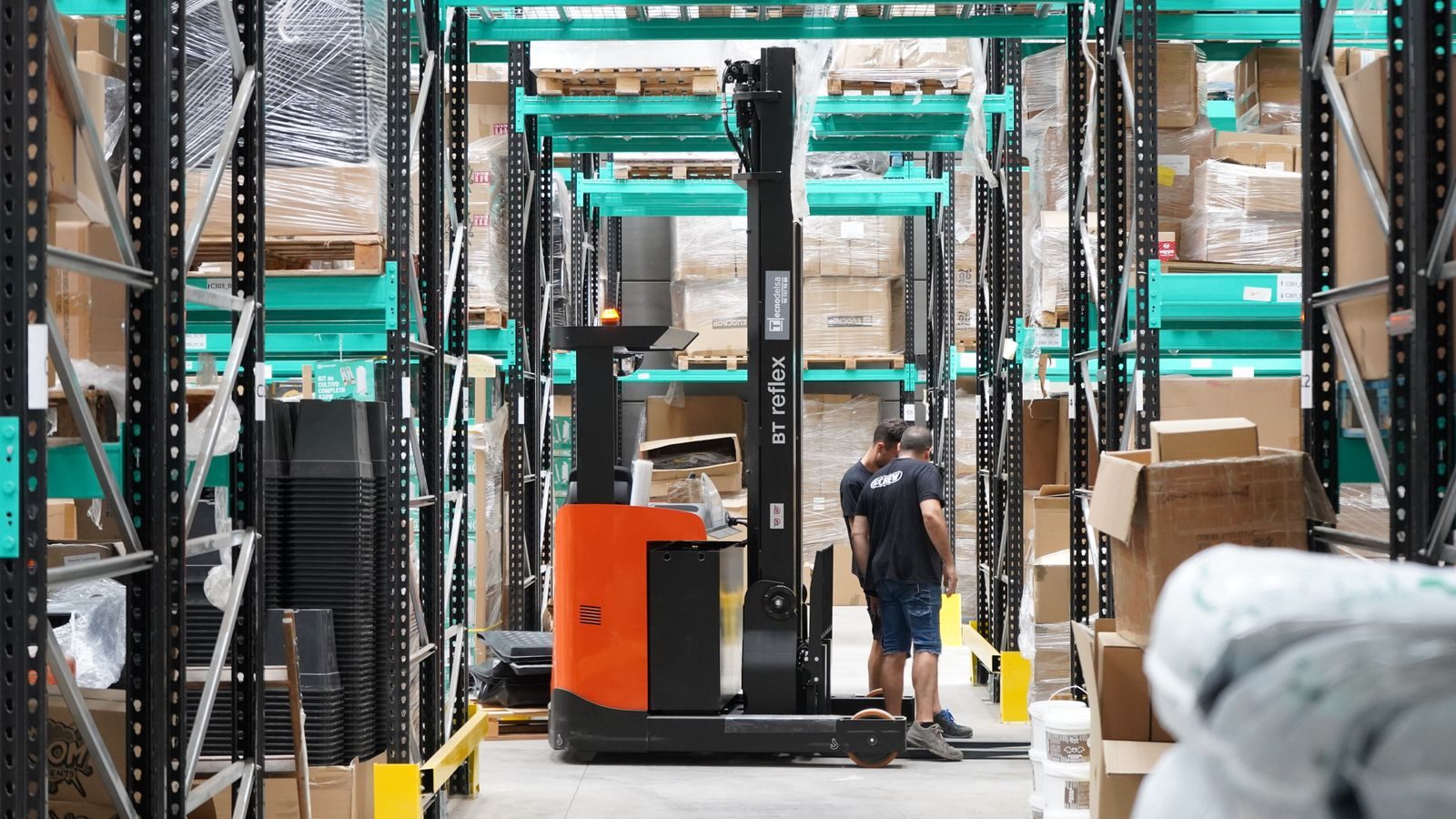
At the core, fulfilment is a small chain repeated thousands of times a day: goods are received and put away, stored, picked and packed to order, handed to a carrier, and - inevitably - some come back. Around that core sit services that vary widely between providers: some are pure pick-and-pack operators, others wrap sourcing, branding, quality control and last-mile into one account.
A provider such as Dropioneer positions itself as an integrated branded-dropshipping and fulfilment platform, advertising a stack that runs from sourcing and procurement through product and package customization, pre-shipment quality checks, warehousing, fulfilment and outbound logistics to one-on-one customer support. That breadth is a choice: a single account owns more of the chain, which can reduce the handoff gaps a multi-vendor setup creates, at the cost of less freedom to mix and match specialists. Either model works; the point is to know which one you are buying and to evaluate the whole chain, not just the warehouse.
How the rate card is actually built
Fulfilment pricing is almost never a single number. It is a set of line items, each on its own basis, and the total moves with your order profile more than with any headline rate. The components are storage, receiving, pick-and-pack, outbound carriage and returns.
Storage is usually charged per pallet or per cubic metre per month, sometimes with a minimum and almost always with a peak surcharge in the fourth quarter. Receiving is charged per inbound unit or per pallet, and it is the line most often missed in a first quote because it is paid by the supplier shipping in, not by the order. Pick-and-pack is charged per order plus a per-item increment, and the increments matter once an order holds several SKUs. Outbound is the carrier rate plus a handling fee, and returns carry a per-return charge plus a restock or disposal cost. The table below puts the basis and the usual trap next to each other.
The order profile decides which line dominates. A store with a few fast-moving SKUs and large orders lives or dies on storage and outbound; a long-tail catalogue with many tiny orders is dominated by pick-and-pack and receiving. Ask any candidate to price your actual order history, not a hypothetical, because the profile is what flips the total.
Integration and inventory accuracy break first
Two things decide whether a fulfilment relationship runs smoothly, and neither appears on the rate card. The first is integration: the partner's system has to receive orders from your store, confirm stock in real time, and post tracking back without a human retyping anything. The second is inventory accuracy - the gap between what the system says is on the shelf and what is physically there.
A provider's own promises are a useful starting signal. Dropioneer, for example, states that orders are shipped within 24 hours and auto-synced to your store, which only holds if the order feed and the warehouse management system talk continuously rather than in a nightly batch. When you evaluate, ask to see the sync live: place a test order, watch it appear in the warehouse queue, and confirm the tracking returns to your storefront. A partner that cannot demo this on request is a partner you will be chasing manually later.

Peak capacity is where promises are tested
Most fulfilment relationships are fine in February and awful in November. The volume a building can physically handle does not change across the year, but the volume it is asked to handle roughly doubles for many consumer categories in the fourth quarter, and that is exactly when cut-off times tighten and promises slip.
A concrete scale indicator helps here. Dropioneer advertises a 3,000-square-metre warehouse in Shenzhen - a stated capacity that tells you the operation is sized for real throughput rather than a corner of someone else's floor, though the number alone says nothing about how well it is run. What you actually want in writing is a peak-season capacity guarantee and a defined daily cut-off, because without those the warehouse size is just a photograph. Ask what happens to your orders when the building is full: do they queue, get diverted, or get a guaranteed slot?
Geography and the delivery promise
Where the stock sits relative to your buyers sets the delivery window, and the window sets customer expectations. A Shenzhen base is well placed for Asian and Oceanian buyers and for ocean and air routings worldwide, but a US customer is still looking at a cross-border leg no matter how fast the warehouse works.
Providers state their delivery promise differently. Dropioneer advertises fast global delivery in 6 to 12 business days, which is a useful anchor for a China-based operation but should be read as a planning range rather than a guarantee, because the last mile in the destination country is the part a Chinese warehouse cannot control. When you compare partners, compare the range they will put in writing and the exceptions they list, not the smallest number on the homepage.
A pre-commitment checklist
Before moving volume, run a structured check. The goal is to convert a sales conversation into evidence. Turn the themes above into a short scorecard you can tick or fail: an integration demo, a test order, a stated inventory accuracy target, a peak-season capacity guarantee, a defined returns rule, and a data export you control.
None of these items is expensive to obtain; each one is expensive to discover missing after your best-seller is sitting in the wrong building. The test order in particular is the single most informative step - it forces every claim about sync, accuracy and dispatch to become observable.
Red flags to walk away from
A few signals justify walking before signing. A partner that will not run a test order, or that insists integration is manual, is telling you how the relationship will feel at scale. Vague SLAs, receiving fees that appear only after goods arrive, and an inability to show live inventory are all signs the cheap rate is hiding operational cost you will pay later.
Equally, be wary of a provider that cannot explain how returns are graded and restocked, because returns are where fulfilment margin is won or lost. A partner such as Dropioneer, which bundles warehousing, fulfilment and returns into one account, is only as good as its written rules for each of those - so ask for them, and treat silence as the answer.
The bottom line
Choosing a China-based fulfilment partner is less about finding the lowest rate and more about removing operational risk before it reaches your customer. The rate card matters, but integration quality, inventory accuracy, peak capacity and a written returns rule matter more, because they are what stand between a clean order and a refund.
Run a structured trial, get the commitments in writing, and treat the test order as the real interview. Providers that bundle the chain - sourcing, warehousing, fulfilment and returns in one account, such as Dropioneer's fulfilment service - can reduce handoff gaps, but only if each link is specified. Do that work up front and the fulfilment line on your profit and loss becomes boring, which is exactly what you want it to be.
Fulfilment sector references
A China-based fulfilment partner is a third-party logistics provider, and the standards that matter when selecting one - operating discipline, documentation and liability - are the same the sector applies anywhere. Trade associations such as FIATA and the multilateral framework published by the World Trade Organization are the neutral sources worth reading before a shortlist is drawn up.
| Line item | Typical basis | What to watch for |
|---|---|---|
| Storage | per pallet / CBM / month | peak surcharge in Q4; minimums; long-tail dead stock |
| Receiving | per inbound unit or pallet | often missing from first quote; ASN compliance fees |
| Pick & pack | per order + per extra item | multi-SKU orders inflate cost; weight bands |
| Outbound | carrier rate + handling | dimensional weight; remote-area surcharges |
| Returns | per return + restock/disposal | disposal vs restock rule; who decides |
How many fulfilment partners should I trial before committing?
One is too few and five is noise. Run a structured trial with two - ideally one integrated platform and one specialist 3PL - on a small shared SKU set, and let the test orders decide. The cost of two trials is trivial against the cost of a year on the wrong partner.
What integration should a China-based 3PL support?
At minimum, order import from your store, real-time stock sync, tracking return to the storefront, and a data export you control. If the provider can only take orders by email or spreadsheet, treat it as a manual warehouse rather than a fulfilment partner, and price the admin time accordingly.
Is a Shenzhen warehouse better for my US customers?
Not directly - a Shenzhen base still faces a cross-border leg to the US. It is well placed for pan-Asian and Oceanian delivery and for global air and ocean routings. If US delivery speed is the constraint, ask the partner about US-side inventory or a trans-shipment option rather than assuming the origin warehouse solves it.
What service level should I get in writing?
A dispatch window, for example orders received by a cut-off shipped within 24 hours; an inventory accuracy target; a defined peak-season capacity and cut-off; and a returns handling rule. Written ranges beat optimistic single numbers, because a promise you can measure is a promise you can manage.
How do I test a fulfilment partner before volume?
Send a small batch of real stock, place a handful of test orders across your sales channels, and watch the sync, the pick accuracy and the tracking return end to end. Pair that with a reference call to an existing client in a similar category. The test order turns every sales claim into something you can observe.