Incoterms 2020 in Practice: Who Pays, Who Insures, Who Clears
The Incoterm decides who books the freight, who insures the cargo and who clears it. How the common terms behave in practice, and the two that mismatch a container's reality.
The trade term is a division of tasks, not a price
An Incoterm answers four questions and nothing else: where the seller's obligation ends, who arranges and pays the main carriage, who carries the risk at each stage, and who is responsible for export and import clearance. It does not set the price, it does not transfer ownership, and it does not say who pays duty - that is a matter of the sale contract and of the destination's rules.
Read that way, the term is a scope document. Two quotes on different terms are not comparable, because one may include an ocean leg and insurance and the other may stop at the seller's loading dock. Comparing them without normalising the term is the most common way a buyer concludes that one supplier is cheaper when it is only selling less.

Risk and cost do not transfer at the same place
The single most useful thing to understand about Incoterms is that the point where cost passes and the point where risk passes are often different. Under the C-terms the seller pays for carriage to the destination, but risk usually transfers to the buyer much earlier, at the point of shipment.
The practical consequence is that a buyer on a C-term can be paying for a shipment that is already their risk while it is still in transit. That is not a trick or a defect; it is how the term is drafted, and it is why the insurance arrangement has to be read on its own rather than assumed from the term. A buyer who assumes that a C-term means the seller carries the risk to arrival will discover the opposite when a container is lost mid-ocean.
The terms that suit container traffic, and the two that do not
FCA, CPT and CIP are the terms drafted for containerised cargo. FCA has the seller deliver to a named place - often the carrier's terminal - and hands over there; CPT and CIP are the carriage-paid equivalents, with CIP additionally requiring the seller to insure to a higher level of cover than the older CIF term.
FOB, CFR and CIF were written for conventional break-bulk cargo, where goods were physically handed over a ship's rail. In a container, the seller typically surrenders the goods at an inland terminal days before the vessel loads, so a term that fixes the handover at the ship's rail describes a moment that no longer occurs. The gap is where insurance disputes and demurrage arguments are born, and the reason the trade bodies that maintain the rules have been recommending the container-era terms for container traffic.
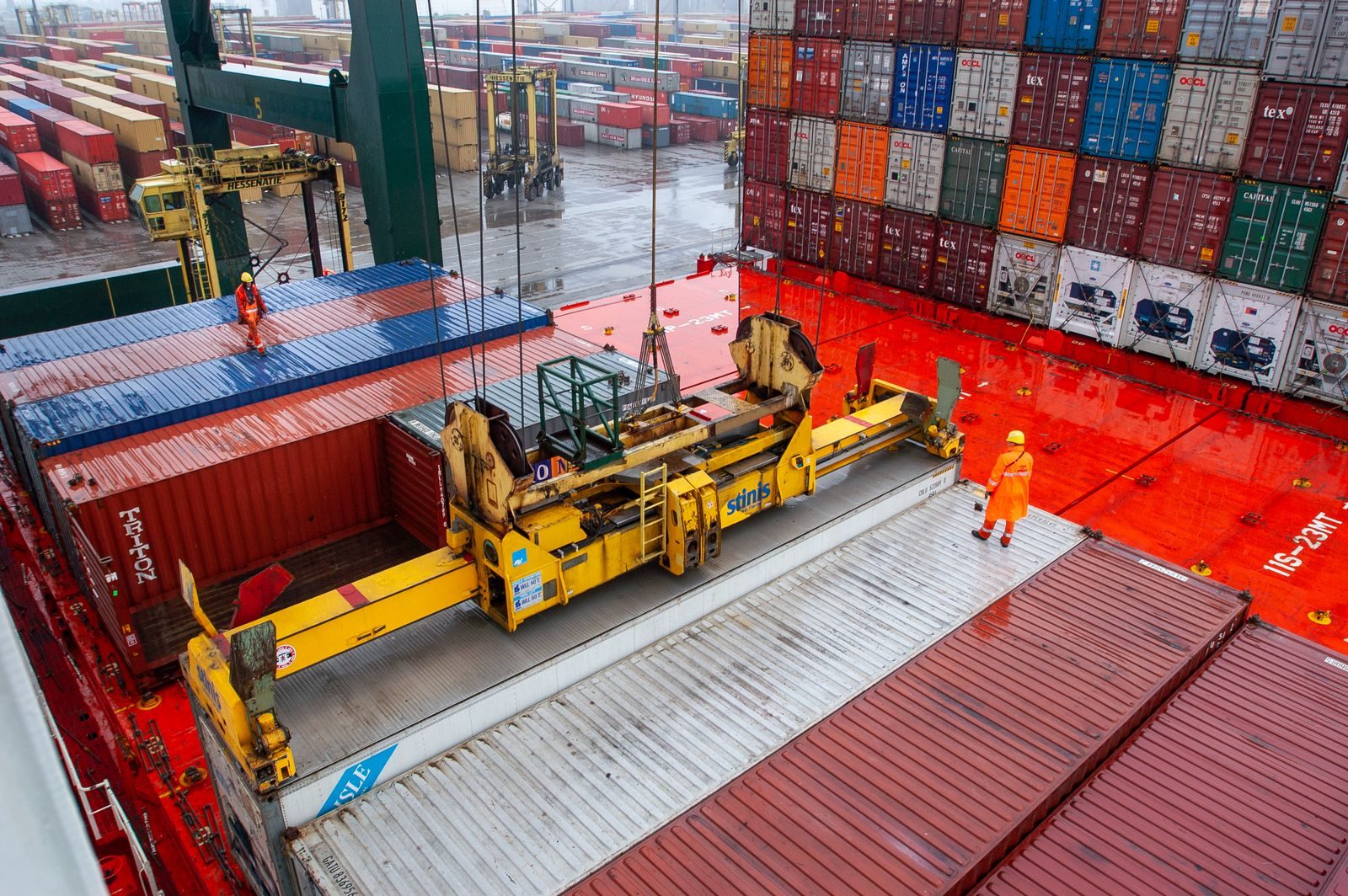
The terms that only work on non-containerised cargo
FAS and FOB, and the C-terms that echo them, fit bulk and break-bulk where the goods really do go over the rail: steel coils, bagged cargo, project pieces loaded directly. For those movements the older terms describe the physical reality accurately and remain the market standard.
The problem is not the term itself but its use on cargo it was not written for. A container stuffed at an inland factory and handed to a forwarder three days before sailing is not being delivered over a rail, and pretending otherwise creates a documentation mismatch that can surface in an insurance claim months later.
Clearance: the obligation most often mis-assigned
Under most terms the seller handles export clearance and the buyer handles import clearance, and DDP is the exception that puts both on the seller. That exception is riskier than it looks, because it makes the seller responsible for the import regime of a country they may not be established in - which in many jurisdictions requires being the importer of record.
The safer structure for a seller who wants to offer a delivered price is DAP or DPU, which stops short of import clearance and duty. The buyer remains the importer, the duty is paid by the party that can recover it, and the seller avoids taking on an obligation they cannot legally discharge from abroad.

Making the term work instead of argue
Name the term with its Incoterms edition and a precise place: not 'FCA China' but 'FCA Shenzhen, Yan Tian terminal'. The place defines the handover, and the handover defines risk. Loose wording is what turns a clear term into a dispute about which terminal, which day and which party should have known.
Then check the insurance against it. Cover runs from the point the buyer's risk begins, which under a C-term is earlier than most buyers expect, and cover that runs warehouse to warehouse including transhipment is the appropriate shape for a containerised movement. The premium difference between that and a narrower policy is small; the difference when a claim arises is not.
References
The rule set is maintained by the International Chamber of Commerce, and the terms themselves are described under Incoterms. For how a destination authority applies them to valuation and clearance, see the European Commission customs pages and US Customs and Border Protection.
| Term | Risk passes | Main carriage paid by | Export / import clearance | Suits containers? |
|---|---|---|---|---|
| FCA | On delivery to the named place/carrier | Buyer | Seller / buyer | Yes - the container-era F-term |
| CPT | On handing to the first carrier | Seller | Seller / buyer | Yes |
| CIP | On handing to the first carrier | Seller (with all-risks cover) | Seller / buyer | Yes |
| FOB | When goods are on board the vessel | Buyer | Seller / buyer | Poorly - handover predates loading |
| CFR / CIF | When goods are on board the vessel | Seller | Seller / buyer | Poorly - same reason |
| DAP / DPU | On arrival at the named place | Seller | Seller / buyer | Yes, where duty stays with the buyer |
| DDP | On arrival, duty paid | Seller | Seller / seller | Possible but makes the seller importer of record |
What is the difference between CIF and CIP?
Both are carriage-and-insurance-paid terms, but CIP requires a higher level of insurance cover than CIF. CIF is the maritime term written for non-containerised cargo, while CIP is the container-era equivalent. For container traffic the container-era terms are the ones drafted for the way the goods actually move.
Who pays import duty under DAP?
The buyer, who is also normally the importer of record. DAP stops short of import clearance and duty, which is exactly why sellers who want to offer a delivered price usually prefer it to DDP - it avoids the seller having to act as importer in a country where they may not be established.
Can I compare two quotes on different Incoterms?
Not directly. Normalise both to the same term and the same named place first, adding the freight, insurance and clearance the cheaper one excludes. A quote on FOB and a quote on CIP are pricing different scopes, and comparing the headline numbers tells you which supplier is selling less rather than which is cheaper.