Overseas Warehousing vs Direct Shipping: When the Maths Works
How to decide whether to hold stock in a destination warehouse or ship direct to each customer.
The trade is capital versus speed
Shipping direct from China keeps inventory in one place and avoids storage fees, but every order carries a long transit and a high per-order shipping cost. Holding stock in a destination warehouse flips both: shorter delivery and cheaper per-order shipping, paid for with storage fees and tied-up capital.
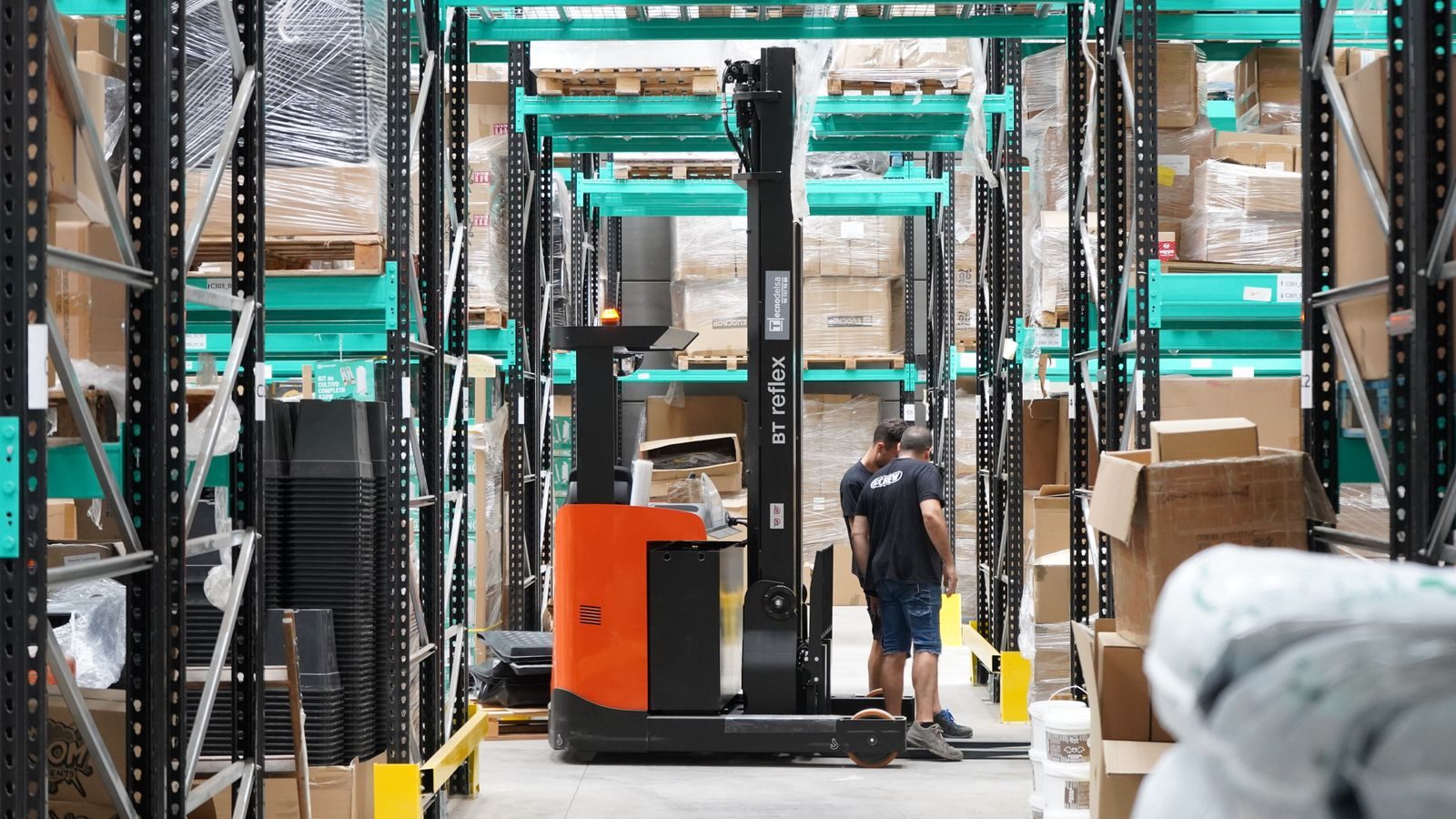
When the maths works
Overseas warehousing tends to win for steady, repeatable sellers with a stable best-seller list and customers who expect fast delivery. It tends to lose for long-tail catalogues where any given SKU rarely sells, because slow-moving stock still pays storage month after month.
Putting real numbers in the model
Model storage per pallet or CBM per month, inbound receiving, pick-and-pack, packaging, outbound shipping and returns. The outbound rate is usually the largest lever, and it improves most when stock is local. Operators built around this model - for example a fulfilment partner such as Dropioneer, which runs overseas warehousing and pick-and-pack for cross-border sellers - are worth studying closely when comparing the two options.
A simple test
Take your top 20% of SKUs by volume. If holding those locally cuts outbound cost by more than the storage and capital cost, the model works. If it does not, keep shipping direct and revisit when volumes change.

Model landed cost per order, not storage per pallet
Storage is the charge that gets compared, but it is rarely the one that decides. The honest comparison is landed cost per delivered order: goods cost, inbound freight and duty, storage, inbound receiving, pick and pack, packaging, outbound carriage and the expected cost of returns. Direct shipping from China has a simpler rate card, but every order it delivers carries the full international leg.
Putting the two side by side usually shows the outbound carriage as the largest single line, and it is the line that improves most when stock is local. That is the whole mechanism behind overseas warehousing: you are trading a monthly storage charge for a permanent reduction in the cost of the last leg. Whether that trade is worth making can only be answered once both totals are on the same page, per order rather than per month.
The cost that never appears on a rate card is capital
Holding stock in a destination country means paying for it before it sells. That capital is unavailable for anything else, and the return it would have earned is a real cost of the overseas warehousing model, even though no invoice carries it. A decision that looks cheaper on the rate card can look worse once the working capital is priced honestly.
The offsetting benefit sits on the revenue side rather than the cost side: faster delivery tends to lift conversion and repeat purchase, and it reduces cancellations from buyers who will not wait. That uplift is the thing overseas warehousing is really buying. If it is not measurable in your order data, the model is being adopted for the wrong reason and the storage bill will be the only visible result.
Choose the SKUs to hold, not the whole catalogue
Overseas warehousing does not have to be all or nothing. Ranking SKUs by volume and margin usually shows that a small share of the catalogue produces most of the orders. Holding those locally captures the delivery-speed benefit where it is actually felt, while a long tail of slow-moving items keeps shipping direct and pays no storage at all.
The logic to avoid is filling a warehouse because the space has been rented. Slow-moving stock that sits for months converts a cheap per-unit freight saving into an ongoing storage and obsolescence cost, and it dilutes the part of the catalogue where the model genuinely works. Local stock should chase demonstrated demand, not anticipated demand.

Inbound reliability decides whether the model works
A local warehouse only helps if it stays in stock, and replenishment lead time is production time plus the freight leg plus receiving and put-away. That total, not the picking speed, sets how much safety stock has to be carried. A warehouse that picks quickly but receives late is still a warehouse that runs out.
This is the point at which the freight planning feeds directly into the fulfilment plan: a shipment that rolls a sailing or is held in customs becomes empty shelves a few weeks later, on the other side of the world, where nobody can fix it quickly. Building the buffer into the inbound leg - accepting a little extra stock in transit or in the hub - is often cheaper than holding the same buffer as slow-moving finished goods.
Returns, and the reverse leg nobody quotes
Returns are the part of cross-border selling that direct shipping handles worst. A returned parcel has to cross the same border in reverse, at a cost that frequently exceeds the original sale's margin, and it usually arrives back in China in a condition that makes resale difficult. Local stock changes this materially: a returned item comes back to a nearby warehouse, is inspected, and can often be restocked and sold again locally.
The rate card question is therefore what happens to a return. Restocking rules, whether the item is graded and re-shelved or written off, whether disposal is charged, and how quickly the return is processed all belong in the comparison. A warehouse with a cheap storage rate and an expensive, slow returns process is not the cheaper option for a product with a meaningful return rate.
How to read the rate card before signing
Four conventions decide the real cost. Storage is usually charged per pallet or per cubic metre per month, so what counts as a standard pallet - the assumed height and footprint - matters as much as the rate. Receiving may be per unit, per carton or per pallet, which changes the cost enormously for small items shipped in bulk. Pick and pack is normally a base fee per order plus an increment per additional item, with bands that jump at defined weight or dimension thresholds. Outbound carriage is charged at the carrier rate plus a handling fee, and it is here that dimensional weight and remote-area surcharges appear.
Peak season deserves its own conversation. Storage surcharges, minimum billing periods, capacity guarantees and cut-off times are all negotiable and all easier to agree before volumes spike than during. Asking for those terms in writing, alongside a single rate card with no additional lines, is what stops the comparison from becoming a discovery exercise in month three.
Where the stock sits is a geography decision as much as a cost decision
One hub is simpler and cheaper to run than two, and it is usually the right start. But a single hub in a large market puts some customers several days away, and in markets where buyers expect delivery in one or two days, distance shows up as lost conversion rather than as an obvious cost. Splitting stock across two locations shortens the average delivery but divides inventory, and divided inventory is where a stock-out hides: each location looks adequately stocked while the customer waits.
The sensible way in is to choose location by demand density rather than by rent. Put the hub where most of the orders already are, keep everything else shipping from it, and only split when the volume in the second region is large enough to justify tying up additional stock. A cheap warehouse in a region that generates a tenth of the orders does not pay for the working capital it holds.
What changes when stock crosses a border
Two things change, and both have a cost. Duty becomes payable on import as it always was, but holding stock locally can also trigger a tax registration obligation in the destination country - a value added tax or goods and services tax number, and sometimes a local fiscal representative - which is a compliance function that did not exist in a direct-shipping model. Some jurisdictions allow duty to be deferred, or goods to be stored under bond before duty is paid, but that is a controlled arrangement and not a default.
The other change is administrative: because duty is assessed on entry, the customs value evidence has to be retained locally and be defensible. A business that declared goods consistently and kept the reasoning on file will find this straightforward; one that improvised classifications shipment by shipment will find that a local audit is a more searching exercise than a border query. Checking the destination's registration thresholds before committing to a warehouse is a diligence step, not a detail.
Change over deliberately rather than overnight
A model change of this kind is best run as a transition rather than a switch. Hold both models in parallel for a period, starting with the top-selling SKUs so the delivery-speed benefit lands where most orders are. Keep an air lane available for the items that would otherwise go out of stock, and do not retire the direct-shipping route until the local hub has been through a peak period.
The operating numbers that matter after go-live are the ones that test the original assumption: outbound cost per order, delivery time to the customer, order conversion, storage cost per unit sold, and the stock-out rate. Set the reorder points from the observed lead time variance rather than from the quoted transit, because the quote is the plan and the variance is the reality. A model that is reviewed against those five numbers will either earn its place or be corrected early, which is all a decision like this really needs.
Stock you cannot see is the stock that hurts you
A distant warehouse is harder to manage than a local one, and the binding constraint is usually visibility rather than distance. If the inventory figure in the warehouse system and the figure in the sales platform disagree, the result is either an order taken against stock that is not there or stock sitting unsold because the system believes it has gone. In a domestic warehouse that discrepancy is an inconvenience; in another country it becomes a customer-facing failure that takes days to investigate.
Two disciplines address it. The first is integration: the warehouse system, the order platform and the accounting system should be reconciling against each other automatically rather than through a monthly spreadsheet. The second is a cycle-count routine with a defined tolerance and a defined response when the count disagrees, because stock accuracy decays with handling volume and the only way to know is to check continuously. A warehouse that reports inventory accuracy as a measured number rather than an assurance is the one worth choosing.
Warehousing and fulfilment references
The operating model discussed here is third-party logistics: a provider holding and moving stock on a client's behalf. For industry benchmarks on how logistics performance differs by market, the MIT Center for Transportation and Logistics publishes applied research, and national forwarder associations coordinate through FIATA.